
The Lost Sheep: The Unreasonable Arithmetic of Grace
Exodus 34:1–9, 27–28; Matthew 18:10–14
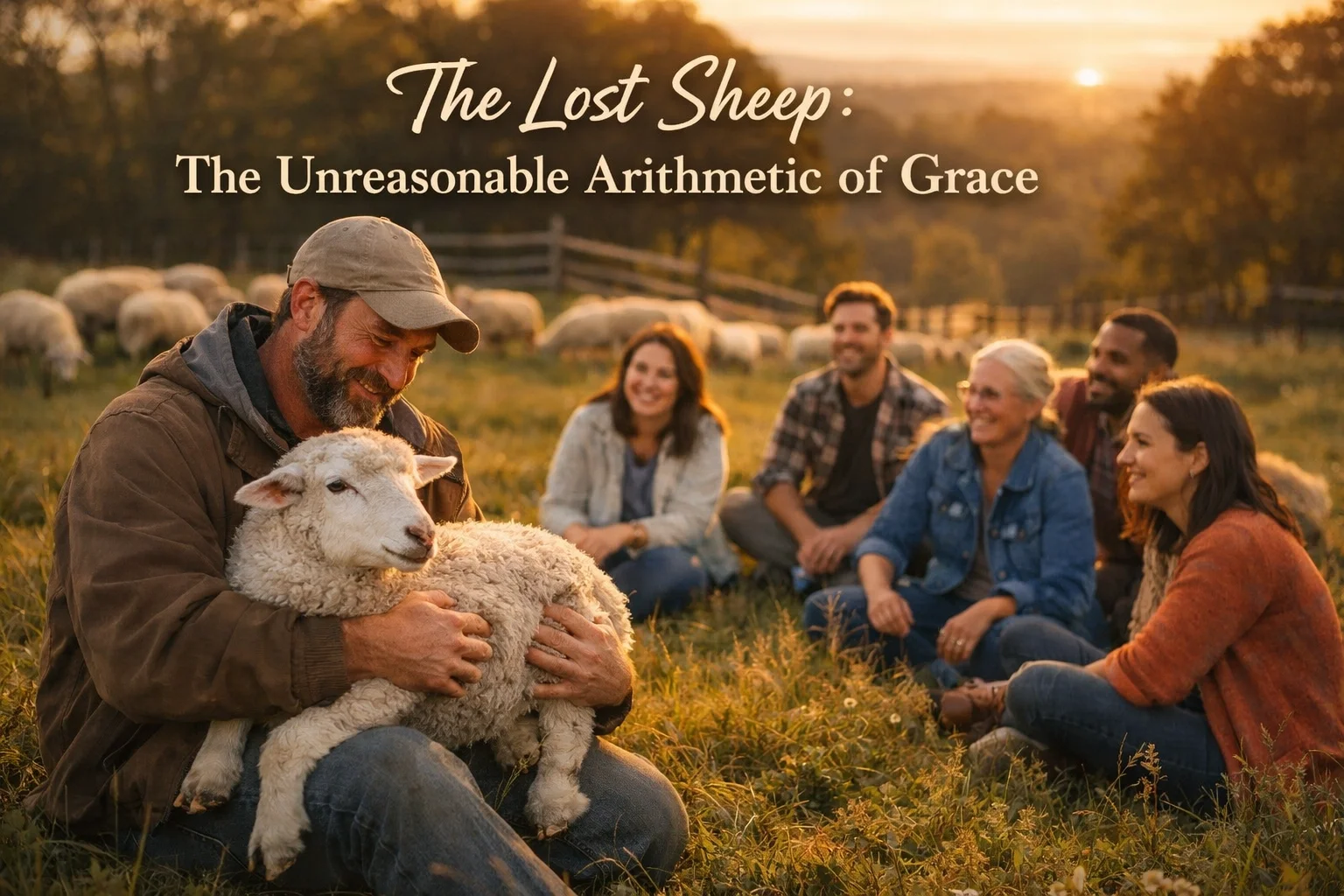
The shepherd has a hundred sheep. Ninety-nine are safe. One has wandered off. And the shepherd leaves the ninety-nine on the hillside to search for the one that is lost. This parable is so familiar that we risk missing its absurdity. What rational shepherd abandons ninety-nine to chase one? The math does not work. The risk is unreasonable.
But God’s love has never been reasonable. It has always been excessive, disproportionate, almost reckless in its particularity. It is not your Father’s will that one of these little ones should be lost. Not one. The kingdom of heaven operates on a different arithmetic.
"Love is not a victory march. It’s a cold and it’s a broken hallelujah." —Leonard Cohen, "Hallelujah"
In Exodus, Moses ascends the mountain a second time. The first set of tablets was shattered—broken by Moses himself when he came down and found the golden calf. Now God tells him to cut new tablets and return. The text tells us Moses was there with the Lord forty days and forty nights. He did not eat bread or drink water. And God passed before him, proclaiming: “The Lord, the Lord, a God merciful and gracious, slow to anger, and abounding in steadfast love.”
Notice: the second set of tablets comes after the failure. After the idolatry. After the shattering. God does not give up on the covenant because the people broke it. He rewrites it. He goes up the mountain again. He starts over—not because the failure did not matter, but because the love is greater than the failure.
This is the pattern of the lost sheep. This is the pattern of Lent itself. We have wandered. We have broken what was given to us. And God climbs the mountain again, leaves the ninety-nine again, rewrites the covenant again. Not because we deserve it, but because the shepherd’s love is unreasonable.
John Cassian, the great monastic teacher of the fifth century, taught that the goal of the spiritual life is purity of heart, and the end of purity of heart is the kingdom of God. But purity of heart is not moral flawlessness. It is singleness of attention—the capacity to be found. The lost sheep does not find its way back. The shepherd finds it. Our only task is to stop running long enough to be found.
If you feel like the one who has wandered—confused, stuck on some far hillside, unsure how you got so far from the flock—know this: the shepherd has already left. He is already searching. The ninety-nine are fine. Right now, the whole attention of heaven is fixed on you.
There is an old Jewish teaching that God counts the tears of each person and stores them in a flask. Not one tear is wasted. Not one moment of loneliness or confusion is overlooked. The lost sheep does not need to be impressive to warrant the search. It needs only to be lost. And in the kingdom's strange arithmetic, the lost sheep is not a statistic to be written off but a beloved creature whose absence changes the entire count. God does not round down. God goes out.