
Stones and Bread: Forging Faith in the Wilderness
Matthew 4:1–11
The Spirit leads Jesus into the wilderness to be tempted. Not the devil—the Spirit. This is important. The testing ground is not an accident or ambush. It is a destination. Before Jesus speaks a single public word, before he heals anyone or calls any disciple, he must face the wilderness.
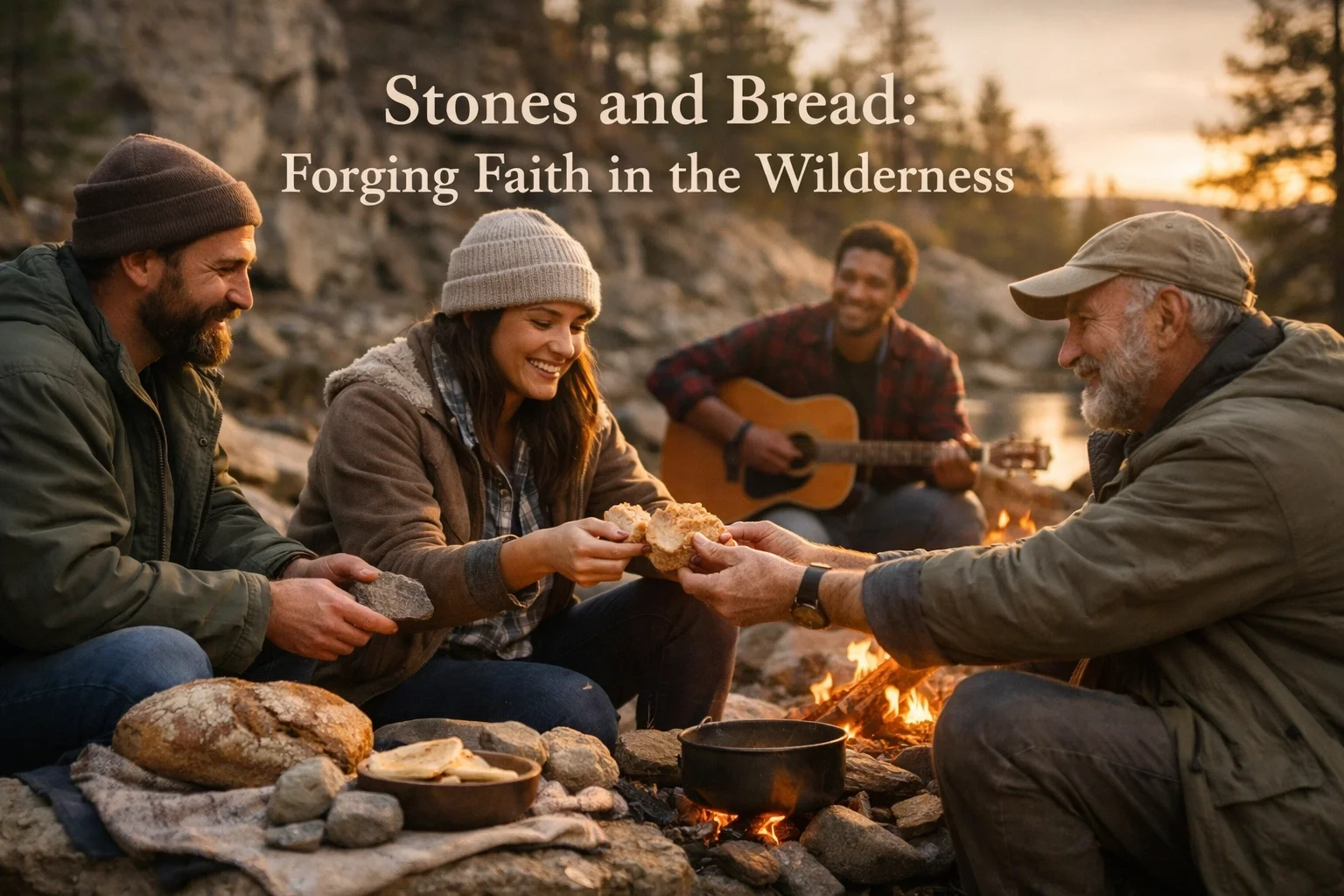
The first temptation is the most human: tell these stones to become bread. Jesus has fasted forty days. He is starving. The temptation is not merely to eat—it is to use divine power for personal comfort. To skip the suffering. To take a shortcut through the desert.
"One does not become enlightened by imagining figures of light, but by making the darkness conscious." —Carl Jung, The Philosophical Tree
Jesus answers from Deuteronomy: one does not live by bread alone, but by every word that comes from the mouth of God. The word here is rhema—not the written text but the living, spoken, present-tense utterance of God. Jesus does not defeat the tempter with theological cleverness. He defeats him with trust. He trusts that God’s voice in the present moment is enough to sustain him, even when his body screams for bread.
Each temptation escalates: from physical need, to spectacular display, to outright worship of power. The devil offers Jesus everything the world considers valuable—comfort, fame, dominion—and each time Jesus refuses. Not because these things are inherently evil, but because they would come at the price of his vocation. He would gain the world and lose himself.
Evagrius of Pontus, the great desert theologian of the fourth century, taught that temptation reveals the passions—the deep, unconscious patterns that drive us. Hunger becomes the need to control. Spectacle becomes the need for validation. Power becomes the need to dominate. The desert strips away pretense and shows us what we actually worship.
In Terrence Malick’s film The Tree of Life, the father played by Brad Pitt tells his sons: Your mother’s naive. It takes fierce will to get ahead in this world. The entire film is a meditation on two ways of being: the way of nature—grasping, competing, surviving—and the way of grace—open-handed, trusting, willing to lose. Jesus in the wilderness embodies the way of grace.
The wilderness is not where faith goes to die. It is where faith is forged. Every Lent is an invitation into the desert—not to prove our strength, but to discover that we can survive on less than we thought. That God’s word, spoken in silence, is bread enough. That the stones do not need to become anything other than what they are.
The wilderness is also where we discover what we truly hunger for. Beneath the hunger for bread lies the hunger for meaning. Beneath the craving for spectacle lies the craving for significance. Beneath the lust for power lies the desperate need to matter. The devil knew this. He targeted not Jesus' body but his identity: If you are the Son of God. Each temptation is an invitation to prove himself—to demonstrate his divinity through display. Jesus refuses. His identity does not depend on performance. He is the beloved Son, not because of what he does, but because of who he is.