
The Secret Room: Where Lent Begins
Matthew 6:1–6, 16–21
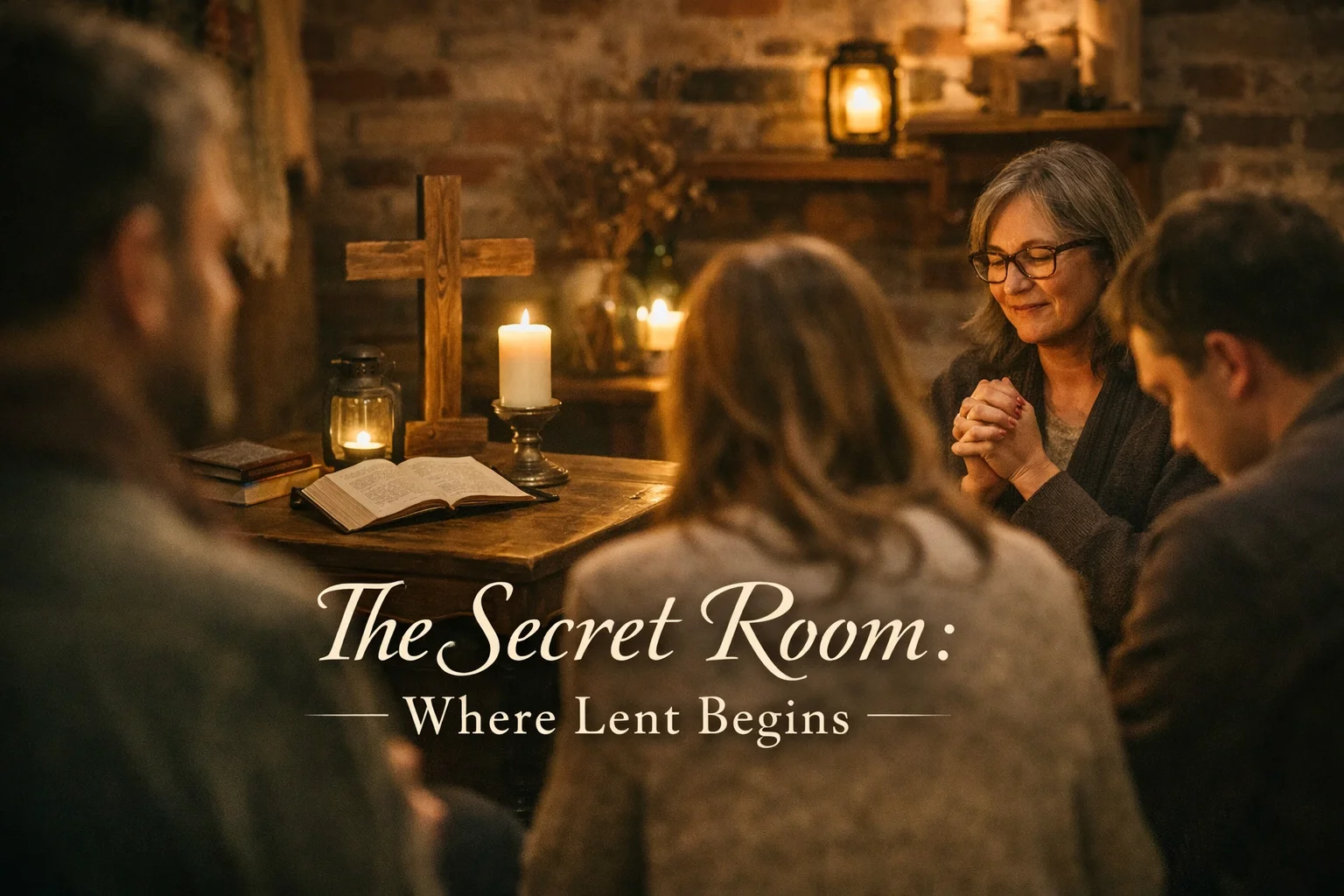
There is a room inside you that no one else can enter. It has no address, no doorbell, no welcome mat. Jesus speaks of it today: go into your room, close the door, and pray to your Father who is in secret. The Greek word is tameion—a storeroom, a hidden chamber. Not a performance hall. Not a stage.
We begin Lent today with ash on our foreheads, which is itself a kind of paradox. We wear outwardly the sign of our mortality while Jesus warns us against practicing our piety before others. Perhaps the ash is permitted precisely because it is not beautiful. No one looks impressive smudged with dust. The ash does not decorate us; it undoes us.
Thomas Merton once wrote that the deepest level of communication is not communication but communion. In that secret room, we are not constructing prayers or rehearsing virtue. We are simply present—unmasked, unadorned—before the One who already knows what we need before we ask.
"In the last analysis, the individual person is responsible for living his own life and for finding himself. If he persists in shifting his responsibility to somebody else, he fails to find out the meaning of his own existence." —Thomas Merton
The Gospel today is not a prohibition against public faith. It is an invitation to depth. Jesus names three ancient practices—almsgiving, prayer, fasting—and for each one, the instruction is the same: do it in secret. The Father who sees in secret will reward you. The reward is not applause. The reward is the Father himself.
The desert mothers and fathers understood this. Abba Moses told a young monk seeking advice: Go, sit in your cell, and your cell will teach you everything. The cell—that small, stripped-down room—was not punishment. It was the furnace of transformation. When there is nothing left to perform, nothing left to project, we finally meet what is real.
Lent begins here. Not with grand resolutions or dramatic renunciations, but with the quiet courage to enter the room. To close the door. To sit in the silence where God is not impressed by us and does not need to be.
The ashes remind us: we are dust, and to dust we shall return. But dust, in the hands of God, is the raw material of creation. The same God who breathed life into clay breathes still—into our secret rooms, our hidden places, the parts of ourselves we show to no one. This is where Lent begins: not in the sanctuary but in the storeroom. Not on display but in the dark, where seeds germinate and something new, quietly, begins to grow.
Today, find the room. Close the door. Sit down. You do not need to say anything brilliant. You do not need to feel anything extraordinary. You only need to be there. The One who sees in secret is already waiting.
What we discover in the secret room is not always comfortable. Sometimes the silence reveals the noise we have been using to drown out the truth. Sometimes the stillness exposes how restless we really are. The fourth-century monk Evagrius Ponticus identified eight thoughts that assault us in solitude—gluttony, lust, avarice, sadness, anger, acedia, vainglory, and pride. These are not sins to catalogue but movements of the heart to notice. In the storeroom, with the door closed, there is nowhere to hide from them. And that is precisely the point. We cannot be healed of what we refuse to see.